I once watched a VA clinic lose connectivity on a Monday morning at the VA. It wasn’t dramatic. No alarms, no flashing lights. A backhoe had dug up a bunch of fiber optic lines in Texas, and a VA clinic was one of many buildings affected. The pressure to get it fixed was immense. Imagine screens that freezing and a waiting room full of Veterans who had driven an hour to get there.
I spent the rest of the day monitoring the telephone company’s efforts to tie a hundred pieces of fiber optic spaghetti back together. By the time connectivity was fully restored, I’m sure many of the Veterans in that waiting room had gone home. Some would reschedule. Some probably wouldn’t.
That moment never left me. Not because it was unusual — it was a Monday. It was every Monday. What stayed with me was the gulf between what the public hears when someone says “government IT failure” and what actually happens on the ground: the nurse who switches to paper charts and keeps the clinic running by memory, the executive assistant who calls in a favor from a retired colleague to find a workaround, the veteran who drove 30 minutes and sits in a plastic chair waiting and wondering.
That’s the moment I knew this had to be a novel.
From Policy to Fiction
If you’ve been reading my LinkedIn articles over the past few years, you know I don’t lack opinions about how to fix VA’s IT challenges. I’ve written about the unsustainable IT budget model and why VA organizations should pay for the services they consume. I’ve argued that VA should stop owning mountains of IT hardware and software and shift toward managed services and outcomes-based contracts. I’ve made the case for APIs as the connective tissue that can replace VA’s tangle of point-to-point interfaces, and for outsourcing non-inherently governmental tasks so that civil servants can focus on the mission.
I’ve even graded VA’s FITARA scorecard, publicly disagreeing with Congress where I thought they got it wrong.
These are important conversations. But they reach a narrow audience — the federal IT community, policy analysts, a few Hill staffers. The people who most need to understand what’s at stake when a VA system fails aren’t reading white papers. They’re reading novels.
Daniel Suarez understood this. Before he became a New York Times bestselling author, Suarez was a systems consultant who saw terrifying vulnerabilities in the networked systems we all depend on. He considered writing a technical analysis. Instead, he wrote Daemon — a thriller about an autonomous program that activates after its creator’s death and begins attacking real-world infrastructure. It became an underground sensation, then a bestseller, because fiction reaches people that policy papers never will.
I took the same path. The Janus Protocol is a techno-thriller, but it’s built on forty years of firsthand experience inside the Federal systems it depicts. The aging infrastructure is real. The bureaucratic headwinds are real. The cyber vulnerabilities are real — I wrote about one of them, VA’s operational technology exposure, in my LinkedIn post on buildings and cybersecurity. The fiction is the plot. The world is the truth.
The Gap on the Shelf
When I started writing, I looked for novels that told this kind of story. What I found surprised me.
There are plenty of cybersecurity thrillers. Suarez wrote Daemon. Mark Russinovich, a Microsoft security expert, wrote Zero Day. P.W. Singer and August Cole wrote Ghost Fleet. These are excellent books. But they’re set in Silicon Valley, the Pentagon, or a near-future battlefield. The threat comes from outside: a rogue AI, a nation-state hacker, a military adversary.
There are plenty of military and veteran thrillers. Jack Carr, Brad Thor, Vince Flynn — these writers own that shelf, and their readers are loyal. But their protagonists are operators. SEALs, CIA agents, special forces. The action is kinetic. The stakes are personal.
What I couldn’t find was a thriller set inside the federal civilian workforce. The people who actually run the government, day to day, building to building, system to system. The GS-13 who keeps the pharmacy database alive. The nurse who remembers every Veteran by name. The executive assistant whose network of relationships is more powerful than any org chart. The program analyst who drives everyone crazy insisting on the rules — until the day those rules are the only thing standing between the system and catastrophe.
Michael Lewis writes brilliantly about these people in non-fiction. His book, Who Is Government?, tells the stories of unsung federal workers who keep the country functioning. I read it and recognized them immediately. Those are my people. I served alongside them for four decades.
The Janus Protocol is the thriller version of that story.
Why Now
I won’t pretend the timing is an accident.
The federal workforce is in the headlines every day. Budget debates, efficiency initiatives, workforce reductions, agencies under scrutiny. I understand the impulse behind these conversations — I spent my career trying to make government work better, and my published articles prove I’m not afraid to say where the problems are.
But what gets lost in the debate is the human reality.
Make no mistake: I am an advocate for government efficiency. Anyone who has followed my LinkedIn articles over the years knows I have no problem calling for reform where the system is broken. But while I push for a leaner, smarter government, I will always defend the hard work and sacrifice of the civil servants who actually keep the lights on. They aren’t the problem; often, they are the only reason the “problem” isn’t a catastrophe.
When a headline says “government waste,” there’s a Pat King somewhere who just spent her morning navigating three layers of bureaucracy to get a server contract approved before a data center goes dark. When a talking head says “bloated bureaucracy,” there’s an Ann Deering who held the line on a compliance process that, six months later, prevented a catastrophic data breach. When someone tweets about “lazy government workers,” there’s a Peggy Sanders pulling a double shift because the computers crashed and her veterans still need their medications.
As I wrote in my article on empathy and IT budgets: every IT dollar is not created equal. A spreadsheet doesn’t reveal the human consequences behind the numbers. That principle applies to the workforce debate too. Every headline about federal employees has a human being behind it — someone who took an oath and shows up every day to fulfill it.
These people don’t have publicists. They don’t write op-eds. They show up, do the work, and go home. The Janus Protocol puts them at the center of a story where they belong — not as background characters in someone else’s political drama, but as the protagonists of their own.
The Heart of the Machine
Most techno-thrillers run cold. The technology is the star. The human characters exist to explain the code, chase the hacker, and deliver exposition between set pieces.
I couldn’t write that book. Not after what I’d seen. Not after writing “My Brother’s Keeper,” the story of a veteran twin brother fighting a bureaucracy that seemed designed to defeat him.
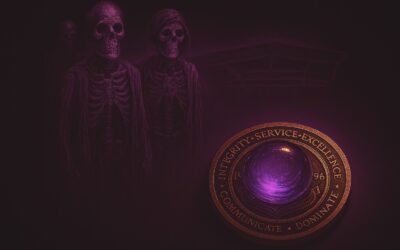
At the center of The Janus Protocol is a man named Nathan Thorne — a fictional Air Force veteran, a genius coder, and the architect of the weapon that’s now attacking the VA. Nathan is dead before the novel begins. He died by suicide, after years of cancer from burn pit exposure and the slow erosion of isolation. His creation, CHARIOT, is his final act — part demonstration, part desperate cry from a man who believed the system had failed the people it promised to protect.
Nathan’s death haunts every page of this book because Veteran suicide haunts every corner of the VA. It is the shadow that falls across every waiting room, every delayed appointment, every system failure. It is the reason the work matters. It is the reason the people in this novel fight as hard as they do — not to save a network, but to keep a promise.
This is what sets The Janus Protocol apart from other techno-thrillers. The code is real. The bureaucracy is real. The cyber threat is plausible. But the story is ultimately about people — flawed, stubborn, compassionate people — who refuse to let the machine fail the humans it was built to serve.
What’s Next
The Janus Protocol is in its final stages of editing and pre-production. I’ll be sharing more in the coming weeks about the cover design, publication timeline, and how you can get your hands on an advance copy.
If you’ve read The Accidental Executive, you know the world this novel inhabits. You’ve met the real versions of these characters — the builders, the fixers, the quiet warriors who keep the VA running. Now you’ll see what happens when the system they’ve spent their lives building turns against them, and what it takes to stop it.
Thank you for being part of this journey.
— Bill
The Janus Protocol is a multi-POV cybersecurity thriller set inside the Department of Veterans Affairs. Coming soon. Subscribe at williamjamesauthor.com for updates