Seventeen Minutes
A story set twenty-one years before the events of The Chariot Protocol
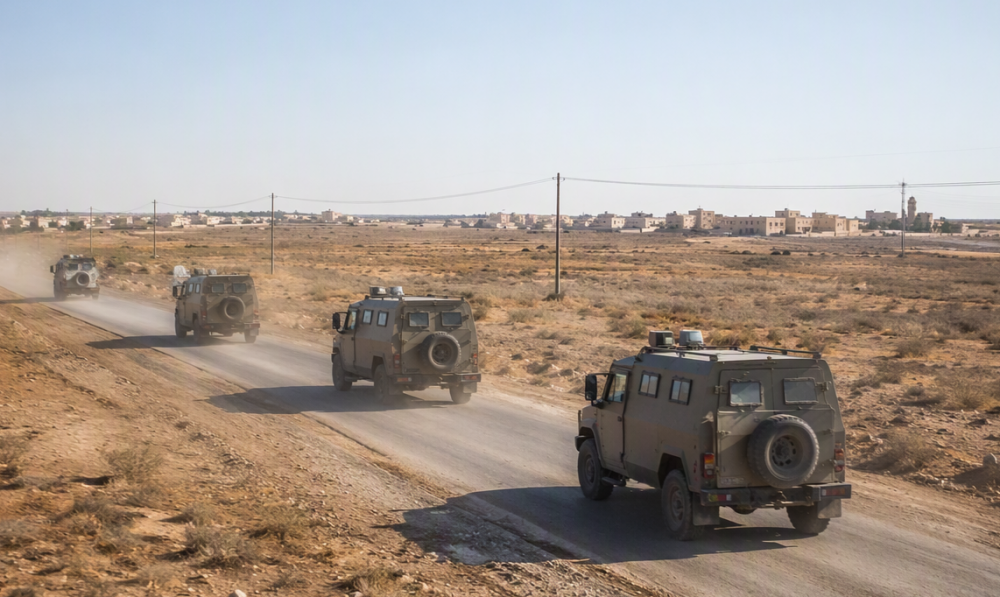
Outside Fallujah — November 9, 2004 — 2100
First Lieutenant Cassandra Reynolds kept her pens aligned even here. Three of them, capped, parallel to the edge of a plywood map table bolted into the back of a signal relay truck that smelled like diesel exhaust and scorched electronics. Her platoon ran commo for a resupply route feeding Task Force 2-2’s perimeter while the fight ground through the city’s guts a mile east. Not glamorous work. Wire, generators, a relay node that had to stay hot no matter what.
Corporal Danny Reyes sat across from her, running the crypto fill on the platoon’s SINCGARS set. Nineteen years old, from Las Cruces, quiet except when he wasn’t. He flexed his knuckles against the plastic case of the fill device while he worked, a habit she’d clocked on day one and never mentioned. He called the radio “her.” Not the truck, not the whole platoon’s gear — just that one radio.
“Sync drifted again,” he said, and re-keyed it. Thirty seconds. Clean validation. He didn’t look up. “She’s being difficult tonight.”
“She’s a machine, Reyes.”
“Sure, ma’am.”
Cass checked her watch. 2103. Four vehicles, fourteen of her own plus five infantry riding security, moving supplies along a route that had been quiet for six straight nights. She uncapped a pen, recapped it, set it back exactly parallel to the others.
2140
The first round landed long, a dull cough somewhere behind the convoy. Nobody flinched. Long rounds happened. The second one didn’t land long.
It walked closer, and then the lead vehicle wasn’t where it had been a half-second before — it was a shape on fire with men moving around it in silhouette, and someone was screaming a name Cass couldn’t place, one voice lost inside four vehicles’ worth of noise. In the third vehicle: urgent-surgical, shrapnel through the thigh, artery involved. The kind of wound that gives you an hour if you’re lucky and does its work in twenty minutes if you’re not.
“Reyes. Nine-line. Now.”
He already had the handset up, thumb on the transmit switch, and nothing happened. He kicked the fill sequence again. The radio’s status light blinked amber, held, and dropped to red.
“She’s not validating,” he said, and his voice had gone up half an octave. “Ma’am, she’s not —”
“Check the encryption, Corporal.”
Flat. Not unkind. Kindness right now would have cost him the half-second of composure he had left, and she needed every half-second he had.
He checked it. The fill failed again. Static ate the net whole.
2140 to 2157
Cass swapped the fill device for the spare, watched the same red light blink up at her, and didn’t waste a breath cursing it. She tried the backup frequency. Nothing but the hiss of a channel with no one home. A third round landed, closer than the second, close enough that the truck’s frame took the shock through its axles and rattled every capped pen off her map table.
“We could go in the clear,” Reyes said.
“Not yet.”
Encrypted and silent meant a soldier bleeding out in vehicle three while two machines refused to agree with each other. In the clear meant handing their position to anyone with a scanner who wanted them dead. Neither one was free.
“Ma’am.” Reyes’s hands had stopped moving. He was looking at her instead of the radio, which was worse. “Are we gonna die out here?”
She didn’t answer that question. She reached over, took the fill device out of his hands, and started the sequence herself — not because he’d done it wrong, but because doing something with her own hands was the only thing she had to offer him that looked like an answer.
“Get me a count,” she said. “Everyone. Names.”
He didn’t ask why. He started counting, out loud, into a dead radio that couldn’t hear him and a lieutenant who could. Fourteen of her own. Five riding security. “Diaz, third vehicle, urgent-surgical” — he said it like it mattered, because it did. Nineteen people who existed, right now, entirely inside the sound of his voice, because nothing else was working.
A fourth round. Farther out this time — whoever was walking the barrage had lost the thread for a second, and Cass took the gift without thanking anyone for it. She re-keyed the fill. Watched the light. Red again.
“Once more,” she said, to no one, to the radio, to herself.
2157
The light went green so fast she almost missed it.
Static, then a voice, broken up but readable: “—eynolds, this is Specter Six, do you copy, over?”
Somewhere overhead, a relay aircraft had drifted into a line of sight nobody down here had ordered and nobody down here would ever thank. Cass didn’t know that yet. She had a live net and the twenty-five seconds doctrine allowed her, and that was enough.
“Specter Six, this is Reynolds, I have a nine-line, urgent-surgical, break —”
She got it out clean. Specter Six read it back word for word, no errors, and told her the bird was already turning.
Cass set the handset down. For one full second she let herself just breathe — in, out, nothing else, no next task lined up behind it — before the next thing arrived to take the second away from her.
The next thing was Reyes, quietly crying with relief and trying not to let her see it, and the medic’s voice on the platoon channel saying the word tourniquet in a tone that told her everything about what the next hour would cost. Diaz kept his life. He didn’t keep the leg.
That was the ledger. Not a win. A trade, and she’d been the one standing there when it got paid.
VA Headquarters — November 12, 2025 — 00:30
Cass stood before the Secretary’s desk, having pushed past his executive assistant to get there. He had a pen in his hand and a Determination and Findings under it, Radek’s name printed near the bottom, three lines above the signature block.
She thought of seventeen minutes she couldn’t speak into, once, a long time ago, in a truck that smelled like diesel exhaust and scorched electronics.
She put her hand flat on the document instead.
“No, sir,” she said. “Please don’t sign that.”
Cass Reynolds — VA Chief Information Officer, and the political appointee who chooses duty over career when the system she trusts stops working — is a character in The Chariot Protocol, a novel where the heroes aren’t spies or soldiers, but the public servants — career and appointed alike — who run the systems everyone depends on.
© 2026 William C. James. All rights reserved.
* A note for my Army colleagues and all who served at Fallujah: this story, and the novel it previews, The Chariot Protocol, are pure fiction. I have no knowledge of any classified or unclassified operations from this era or any other. Cass Reynolds and the events of this story are products of my imagination. Any resemblance to actual units, people, operations, or events is purely coincidental.
She didn’t wait for backup then. Don’t wait for the novel now.
Cass Reynolds spent seventeen minutes learning to hold a line with nothing working. The novel’s the moment she has to do it again, with a whole department watching.
Order Now on AmazonPrefer updates over purchases? Get news on future books and new fiction from the universe.