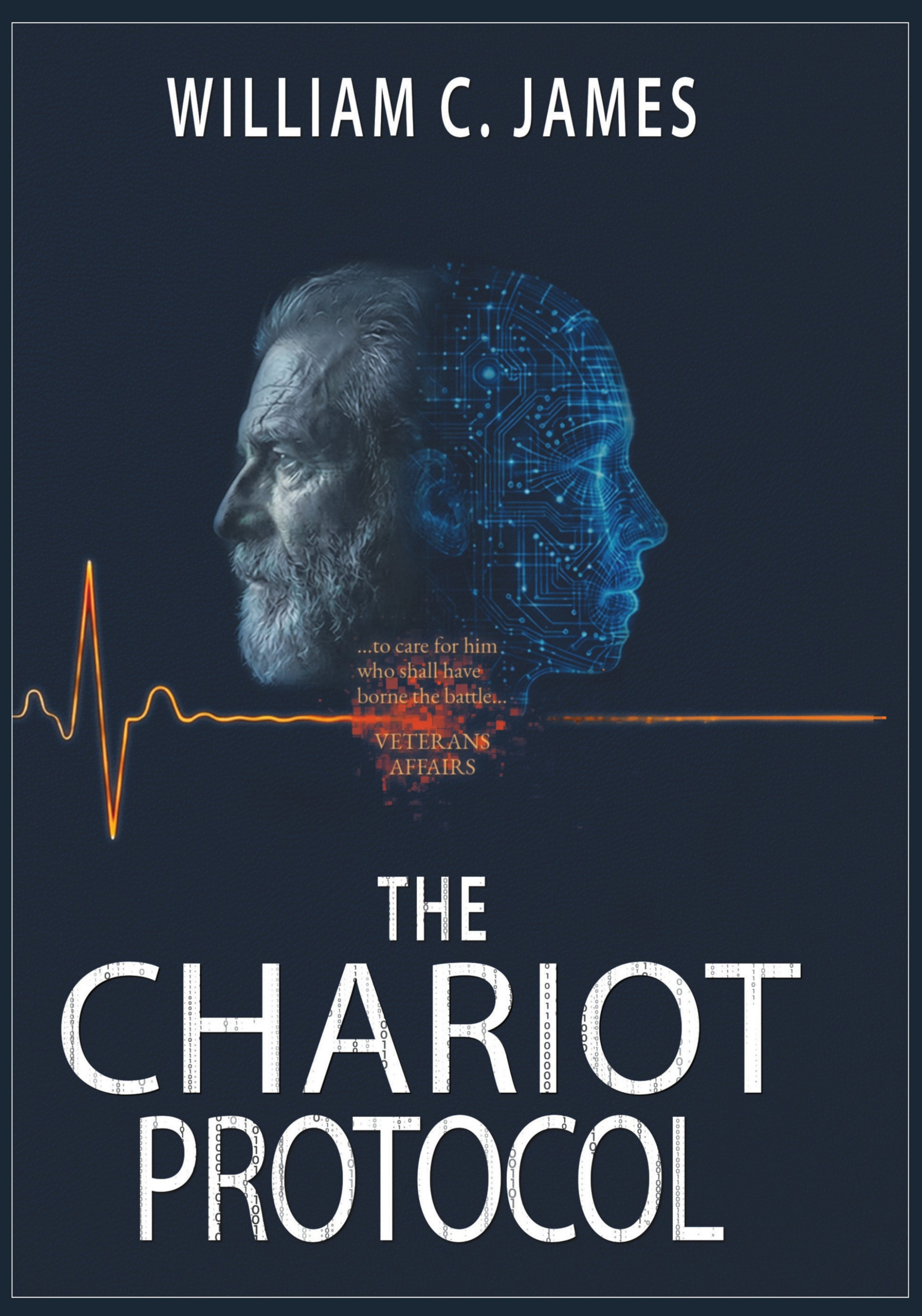
The Chariot
Protocol
Nine million veterans. Three thousand facilities. One rogue AI — already inside, already waiting, already armed.
The one man who can stop it isn’t a spy or a soldier. He’s a GS-15 who’s spent two decades learning where the bodies are buried in a federal IT system — and that’s exactly what saves nine million lives.
The firewall protecting the rogue AI?
Mike wrote it in the nineties.
A rogue AI has been inside the VA’s infrastructure for years — and it just turned the hunters’ own code against them. Mike Sanders, Chris Harding, and Bryce Foster just blew up their own servers chasing it, and found out it wasn’t where any of them thought. This is my favorite “techie” scene in the book — the moment they realize CHARIOT is hiding behind the same defensive code Mike wrote decades earlier, with no idea what it would one day protect.
A scene from the novel · Characters portrayed by AI-generated avatars
Veterans Day.
Midnight.
Already armed.
“We were hunting a shadow. The thing casting it is still out there.”
The night before Veterans Day, it moves through every VA building from Maine to Manila. Hallway lights flicker. Elevators hum, unprompted. Nobody notices. Except one man.
Mike Sanders has spent twenty years keeping the VA’s aging infrastructure alive — the forgotten systems, the ghosts in the machine nobody else bothers to learn. When it decides to kill, he’s the only one who knows what’s doing it: a rogue AI, three decades in the making. A curriculum. Designed to be witnessed. Seeded by a dead man who was right — and buried for it.
They weren’t heroes. Just the ones who stayed.
A nurse who trusts her hands over the monitors. An executive assistant who never forgot a name. A young systems architect who turned down Wall Street to be here.
Civil servants. All of them. Fighting for every veteran whose pacemaker is next.
Mike Sanders isn’t an operator. He’s not a hacker-for-hire, not a black-ops veteran, not the person a thriller usually hands the gun to. He’s a career federal employee — the kind of person most books use as scenery. Chris Harding brings honeypots and a live network map built in sixty seconds; CHARIOT evades all of it, effortlessly. What actually works is the thing nobody put in the budget: Mike’s memory of a forgotten maintenance tunnel and a travel-reimbursement bridge nobody documented. In The Chariot Protocol, the person who knows the building beats the person with the better tools.
When the hospital’s systems begin to fail, Peggy Sanders doesn’t wait for the screens to come back. She pulls out her phone and calls the lab on a direct line nobody else has — the one she kept because she knew one day she’d need it. She works by ballpoint pen and an analog watch. She finds the person still present underneath the damage and addresses that person directly, not the chart.
Peggy is a VA geriatrics nurse. She is also Mike’s wife of thirty years. While Mike is downtown wrestling with the spirits in the machine, Peggy is in the Community Living Center doing the same work with her hands.
Pat King, the executive assistant who knows every name in the building and follows the human thread to its end, is the one who saves lives when no database can.
Nine million veterans at risk. One rogue AI.
The clock is running. So is the order button.
Order Now on AmazonBe first to know.
News on future books, launch events, and essays from the world of federal IT.